
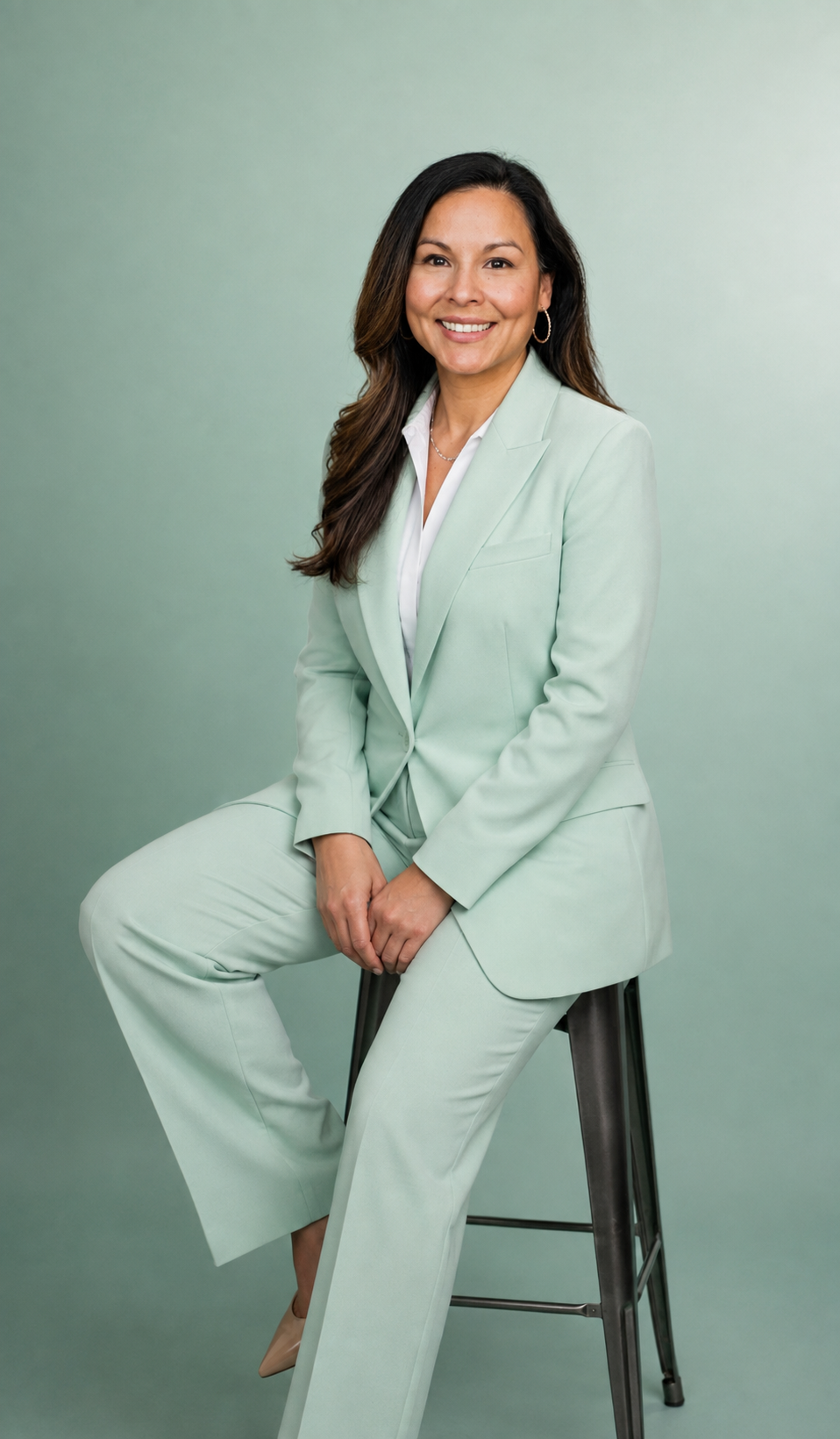
Hi, I'm April. I didn't grow up knowing how money worked. I learned it, applied it, and eventually realized I could use money to create freedom. Applying what I learned allowed me to retire in my 40s. Now I want to make that knowledge easier for everyone else to access.
Growing up, my family often struggled to pay the bills and keep food on the table. Buying new clothes or shoes wasn't something we did regularly. Like many families, I learned my first lessons about money from the people around me.
I heard that having too much money was selfish or greedy. Credit cards were bad. People who had money were sometimes viewed as different from us.
Those beliefs shaped how I thought about money for years. I didn't get my first credit card until I was 27, out of fear that I would ruin my credit.
I also became a mother while I was still in high school. Suddenly, I wasn't just responsible for figuring out my own future. I had another person depending on me.
I knew I wanted something different for myself and my family, so I decided education would be my way forward. I was determined to graduate from college with a degree in technology, and I taught myself how to navigate financial aid so I could finish school without taking on student debt.
I didn't have a financial roadmap. I learned by asking questions, figuring things out, and finding people who knew more than I did.
The Four Pillars of My Financial Foundation
Over time, I realized that building financial security isn't about one big decision. It's a series of decisions that build on each other. That realization led me to the four pillars I teach today: Mindset. Manage. Build. Protect.
1. Mindset
Before I could change my finances, I had to change the way I thought about money. I had to question some of the beliefs I grew up with and understand that money wasn't inherently good or bad. Having money didn't make someone selfish, and learning how to build wealth wasn't reserved for wealthy people.
Money is a tool. For me, the right mindset didn't mean believing I would become rich overnight. It meant believing I had the ability to learn, make better decisions, and change my financial future.
2. Manage
The next step was learning how to manage the money I actually earned. I learned that making more money doesn't automatically create financial security. I had to know where my money was going, spend intentionally, manage debt, build savings, and put some of what I earned toward my future.
I also learned a lesson I still believe today: working hard matters, but working smarter matters too. In the Latino community, we're often taught that working hard is what earns us our reward. I still believe in hard work, but I've learned that a paycheck is only one part of the equation. What I did with what I earned turned out to be just as important.
3. Build
Early in my career, I landed on a trading desk. I didn't know much about the stock market when I started. I didn't know what a stock was, how a mutual fund worked, or how people actually built wealth through investing. But I was surrounded by people who did.
So I listened. I asked questions. I learned. I took what I was learning at work and applied it to my own life. I taught myself about investing, retirement accounts, compounding, and the power of staying invested over time.
I learned that building wealth doesn't have to mean picking the next hot stock or taking enormous risks. For me, it meant keeping things simple, automating what I could, investing consistently, and giving my investments time to grow.
4. Protect
Eventually, I realized that building wealth is only half the journey. I also had to protect what I had built. That meant having the right emergency savings, understanding insurance, managing debt responsibly, thinking about taxes, protecting my assets, and planning for the unexpected.
Financial success isn't just about reaching a number. It's about creating a financial foundation that can withstand the ups and downs of life.
The Result
After many years of working, saving, investing, and learning, I was able to retire in my late 40s. It wasn't because of an inheritance or a financial windfall, and I didn't have a secret investment strategy. It came from applying the same four principles over and over:
- Changed my mindset.
- Managed what I earned.
- Built my wealth.
- Protected what I built.
The biggest thing I gained wasn't a number in an investment account. It was freedom.
Money gave me choices. It gave me the ability to decide how I wanted to spend my time and what I wanted the next chapter of my life to look like. I realized that financial freedom isn't only for wealthy people. It starts with understanding how money works and making intentional decisions with what is available.
Teaching the Next Generation
I'm a mother of five. Two of my children are in college and three are working, and my husband and I have made financial education part of raising our kids. We've taught them how the stock market works, how to buy investments, and why starting early matters.
We don't expect them to get every financial decision right. We want them to understand how money works so they can make informed decisions for themselves.
That's one of the biggest reasons I'm passionate about financial literacy. I know what it feels like to start without a financial head start. I know what it's like to believe certain things about money simply because that's what I was taught. And I know how empowering it can be to realize I could learn, change my habits, and create a different financial future.
Why Wall Street 4 Main Street Exists
I created Wall Street 4 Main Street to make financial education easier to understand and more accessible. I spent years working in and around the financial industry, but I didn't start there knowing how money worked. I had to learn it myself.
Now I want to take what I learned from Wall Street and make it useful for Main Street. No complicated jargon. No assumption of prior investing knowledge. No promise of getting rich quick.
Just practical financial education built around four simple ideas: Mindset. Manage. Build. Protect.
This platform is for anyone starting from nothing, starting over, or simply realizing that no one ever explained how money works. Financial literacy isn't reserved for the wealthy. Investing doesn't require being an expert. And no one has to figure it out alone.
My goal is simple: to help people understand their money so they can build a life with more freedom, choices, and opportunities.